
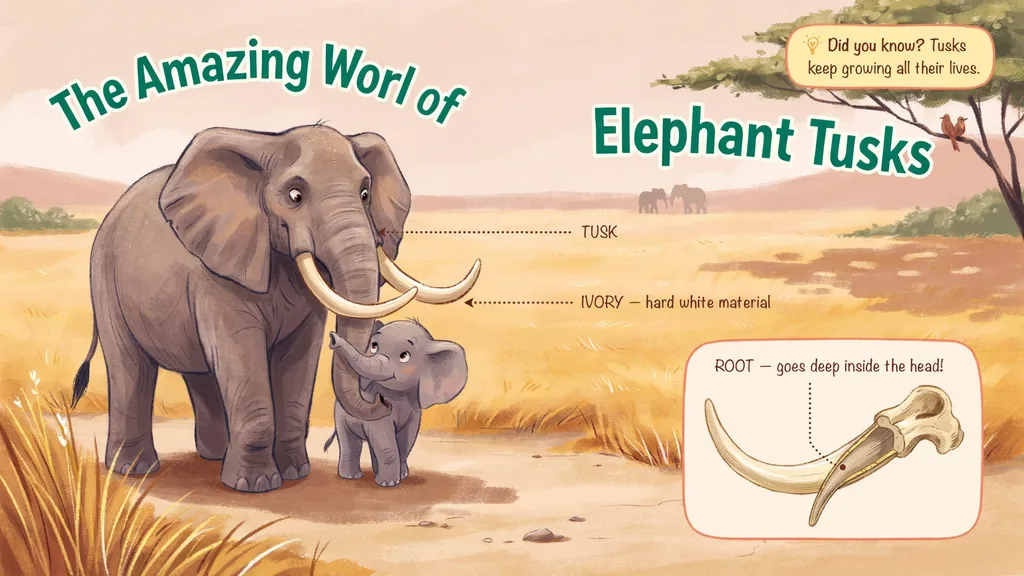
The Amazing World of Elephant Tusks
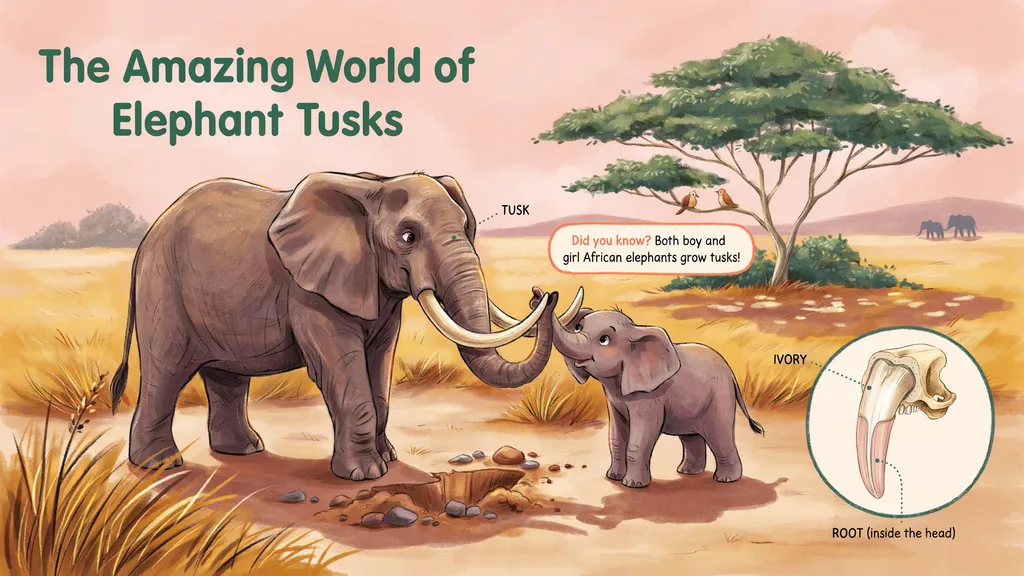
Have you ever seen an elephant and wondered about those long, white teeth sticking out of its mouth? Those are called tusks! They are not just for show. Elephants use their tusks like we use our hands and tools every single day. An Elephant Tusks is actually a very special tooth that keeps growing and growing over the years. Both boy and girl African elephants can have them, but only some Asian elephants grow them big and strong.
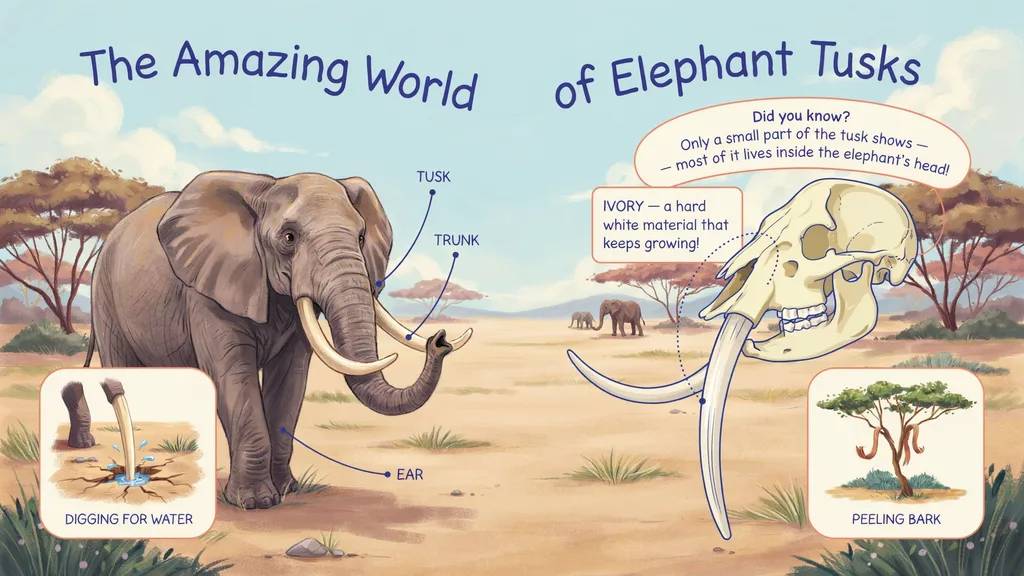
An elephant tusk is made of a hard, white material called ivory. It is super strong, just like the bones inside your body. Did you know that these giant teeth go deep inside the elephant’s head? Only a small part of the elephant tusk sticks out in the open air. These amazing tools help elephants dig up dirt for water, peel bark off trees, and even move heavy logs out of their way. Without an elephant tusk, life in the wild would be very hard for these gentle giants.
| Feature of an Elephant Tusk | Detail / Fact |
| What is it made of? | Ivory (hard, strong tooth material) |
| How deep does it go? | One-third stays hidden inside the skull |
| Do all elephants have them? | All African elephants, but only some Asian elephants |
| Main uses | Digging, lifting, protecting, and peeling bark |
| Can they break? | Yes, and elephants can be left-tusked or right-tusked |
| Do they grow back? | No, once a tusk breaks or is lost, it does not grow back |
Why Do Elephants Have Tusks?
An elephant tusk is like a Swiss Army knife in the animal kingdom. Elephants use their long teeth to do many tricky jobs in the wild. When the weather gets dry and hot, water hides deep under the dry dirt. An elephant will use its elephant tusk to dig a deep hole until it finds cool water to drink. This smart trick helps other thirsty animals in the grasslands find water too!
Trees also give elephants a lot of food. Sometimes, the best parts of the tree are hidden right under the rough outer bark. An elephant uses its elephant tusk to peel the bark away so it can eat the sweet and soft wood underneath. They also use their heavy tusks to push down small trees or move big branches when they walk through thick jungles. It is amazing how much work an elephant tusk can do in a single day!
How Tusks Grow Like Human Teeth
Did you know that an elephant tusk is just like your own teeth? Well, sort of! They are made of dentin and covered in enamel when the baby elephant is very small. As the young elephant grows up, that outer layer wears off, leaving the shiny ivory exposed. A baby elephant is born with small milk tusks, just like your baby teeth. These tiny milk teeth fall out when the little elephant is about one year old.
After the baby teeth fall out, the permanent elephant tusk starts to grow out and never stops! It keeps getting longer and heavier as the elephant gets older. You can actually tell how old an adult elephant is by looking at how long its elephant tusk has grown. If a tusk gets chipped or worn down, it stays that way forever because it does not heal like skin or grow back like hair.
Left-Handed or Right-Handed Elephants?
Just like you might prefer to write with your left hand or your right hand, elephants have a favorite side too! If you watch an elephant closely, you will see that one elephant tusk looks a lot shorter and more worn out than the other one. That is because the elephant uses that specific elephant tusk more often for digging and scraping.
Scientists call this being “tusked,” and elephants can be either left-tusked or right-tusked. If an elephant always uses the left side to dig up roots, that left elephant tusk will get shorter and rounder at the tip. The other side stays nice and sharp because it does not do as much hard work. It is a fun little secret that makes every single elephant unique in the wild!
The Secret Inside: How Deep They Go
Many people think an elephant tusk just sits right on the edge of the mouth like a Halloween vampire tooth. But that is not true at all! A huge part of the elephant tusk is hidden safely inside a deep pocket in the elephant’s skull. In fact, up to one-third of the total length of an elephant tusk is tucked away inside the head.
This deep root keeps the heavy elephant tusk strong and steady so it does not snap off when the elephant pushes heavy objects. Inside the skull, the root has living tissue with blood and nerves that feed the tooth and make it grow. Because it is connected so deeply, an elephant tusk is a very important part of the elephant’s living body, not just a dead shell.
How Elephants Protect Themselves
Life in the wild has some scary moments, even for giant animals. Lions and tigers sometimes try to sneak up on young elephants when the herd is moving around. A strong elephant tusk acts like a shield to keep the family safe from big predators. When danger is near, the big elephants stand in a circle around the babies and show their sharp tusks.
Most wild cats know better than to mess with a grown-up elephant holding a long elephant tusk. They can swing their heads and poke the ground or swipe at enemies if they have to defend themselves. But most of the time, elephants are very peaceful and just want to eat leaves. They only use their elephant tusk for fighting if a big emergency happens in the grasslands.
African vs. Asian Elephants: The Big Difference
Not all elephants look the same when it comes to their faces! If you look at African elephants, almost every single one of them has a big, long elephant tusk. Both the mom and dad elephants show off these amazing ivory tools proudly as they walk across the warm sun.
Asian elephants are a little bit different. Only the boy Asian elephants grow a long and visible elephant tusk. Most girl Asian elephants do not have them at all, or they have tiny little pegs that stay hidden inside their mouths. Because of this, seeing an elephant tusk on an Asian elephant is much more rare and special than seeing one on an African elephant.
Why People Love Ivory
For hundreds of years, people have loved the smooth and shiny look of ivory carved from an elephant tusk. Artists used to make beautiful piano keys, chess pieces, and fancy statues out of this special material. Because an elephant tusk looks so pretty and bright white, people paid a lot of money to buy things made from it.
Sadly, this desire for ivory caused big trouble for the gentle giants in the wild. Bad people started hunting elephants just to take their elephant tusk and sell it for cash. This made the number of elephants drop very fast all over the world. Today, almost every country has strict laws to stop the trade of an elephant tusk so the animals can stay safe and happy in their homes.
Conclusion
Protecting elephants is one of the most important jobs we have on planet Earth. Rangers work day and night in big national parks to make sure poachers do not hurt an elephant tusk or the animals attached to them. When we teach people why an elephant tusk belongs on a living elephant and not in a store, it helps stop the cruel trade.
You can help too by learning about these amazing animals and sharing cool facts with your friends at school! Never buy anything made of ivory, and always support parks that give elephants a safe place to roam around. Every time an elephant tusk stays safe on a wild elephant, the world becomes a much better and kinder place for all living creatures.
Frequently Asked Questions
Do all elephants have tusks?
No! While all African elephants have an elephant tusk, only male Asian elephants grow large and visible ones.
What is an elephant tusk made of?
An elephant tusk is made of ivory, which is a hard, strong material very similar to the dentin found in human teeth.
Can an elephant survive without a tusk?
Yes, an elephant can live without an elephant tusk, but it makes daily tasks like digging for water and peeling tree bark much harder.
Do broken tusks grow back?
No, once an elephant tusk breaks or is damaged near the root, it will not grow back and stays like that forever.
Why do elephants use their tusks to dig?
Elephants use an elephant tusk to dig deep into dry riverbeds to find clean drinking water during the hot summer months.
Are elephant tusks teeth or horns?
An elephant tusk is actually a giant modified tooth that grows continuously throughout the animal’s entire life.