
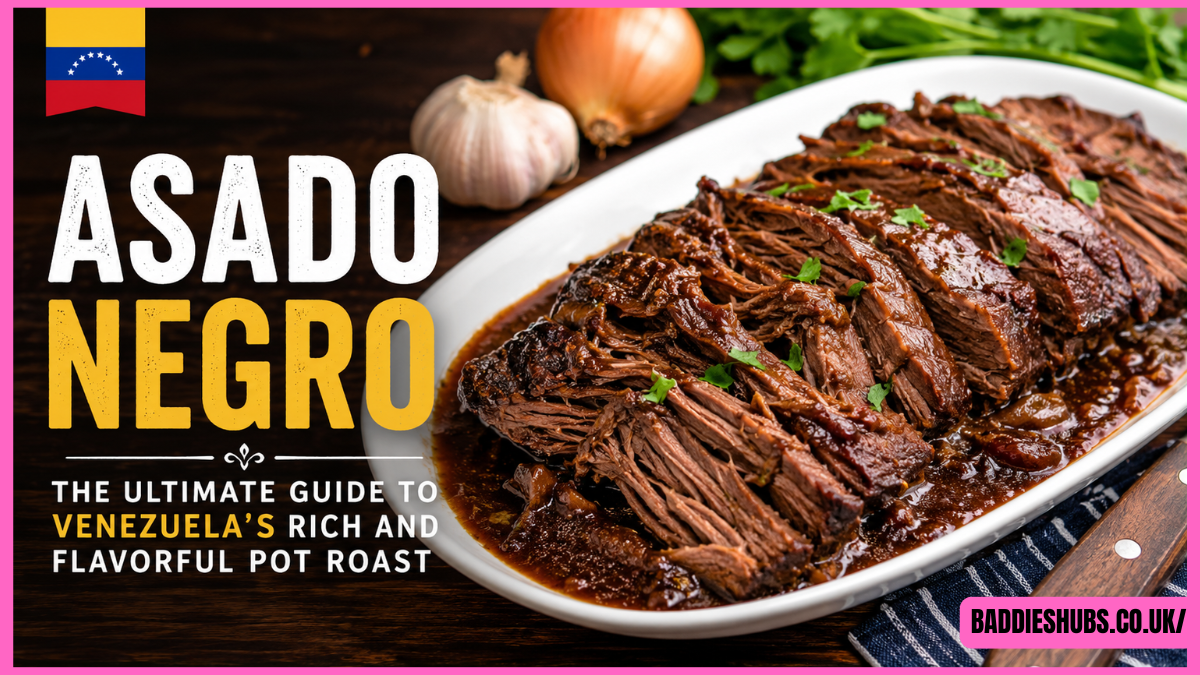
Asado Negro: The Ultimate Guide to Venezuela’s Rich and Flavorful Pot Roast
Introduction & What Is It?
Asado Negro is one of the most beloved traditional dishes of Venezuela. This slow-cooked beef roast is famous for its deep brown, almost black-colored sauce created by caramelizing sugar and simmering it with beef, wine, spices, and aromatics for several hours.
Originating from Venezuelan home kitchens, Asado Negro is considered a celebratory meal often prepared for family gatherings, holidays, birthdays, and Sunday lunches. The dish reflects the country’s culinary heritage, blending Spanish cooking techniques with local ingredients and flavors.
The name literally translates to “Black Roast,” referring to the dark caramelized gravy rather than burnt meat. Despite its appearance, the flavor is surprisingly balanced, featuring sweet, savory, slightly tangy, and richly beefy notes.
In recent years, Asado Negro has attracted international attention as diners increasingly seek authentic Latin American cuisine. Food enthusiasts appreciate its comforting nature and the craftsmanship involved in preparing a perfectly tender roast.
A similar dish often compared to Asado Negro is pot roast from North America or the Italian Brasato al Barolo, although the Venezuelan version stands apart because of its signature caramelized sugar sauce.
Asado Negro represents much more than a meal in Venezuela—it symbolizes hospitality, family traditions, and festive celebrations.
Why It Is Popular
Several factors explain why Asado Negro continues to gain popularity worldwide.
Reasons People Love Asado Negro
- Unique sweet-savory flavor profile
- Extremely tender slow-cooked beef texture
- Ideal comfort food for family gatherings
- Rich cultural and historical significance
- Pairs well with numerous side dishes
- Fits into modern gourmet dining trends
Food lovers are increasingly seeking authentic dishes with a story behind them, and Asado Negro delivers both culinary excellence and cultural depth.
Main Ingredients
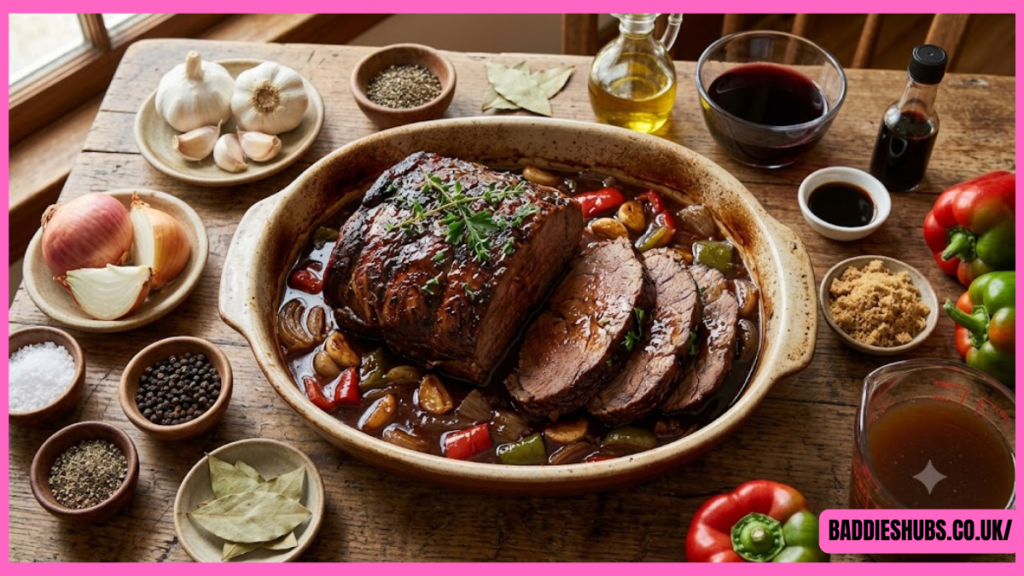
| Ingredient | Purpose in the Dish |
| Beef Eye Round | Main protein and structure |
| Sugar | Creates caramelized dark sauce |
| Red Wine | Adds acidity and depth |
| Worcestershire Sauce | Enhances umami flavor |
| Garlic | Aromatic base |
| Onion | Sweetness and body |
| Beef Stock | Provides moisture while braising |
| Bell Pepper | Additional flavor complexity |
| Black Pepper | Mild spice |
| Bay Leaves | Herbal aroma |
| Olive Oil | Searing the meat |
| Salt | Seasoning balance |
The quality of the beef significantly influences the final dish. Lean cuts that withstand long cooking times are generally preferred.
Best Places and Restaurants to Find It
Although Asado Negro remains primarily a homemade specialty, visitors can find excellent versions in Venezuelan restaurants around the world.
Traditional Venezuelan Restaurants
Visitors love these establishments because they:
- Follow family recipes
- Use slow-cooking methods
- Serve authentic accompaniments
Latin American Fine Dining Venues
Popular because they offer:
- Elegant presentations
- Premium beef selections
- Extensive wine pairings
Community Festivals
Guests appreciate:
- Homemade authenticity
- Regional interpretations
- Festive atmosphere
Venezuelan Bakeries with Hot Food Counters
Reasons diners enjoy them:
- Affordable prices
- Fresh daily preparations
- Convenient takeaway options
Many Venezuelan expatriate communities in major cities maintain strong culinary traditions, making local Venezuelan eateries excellent places to try authentic Asado Negro.
Top Cities with the Best Scene
| City | Culinary Influence | Scene Vibe |
| Caracas | Traditional Venezuelan cooking | Authentic and family-focused |
| Miami | Venezuelan diaspora cuisine | Modern and diverse |
| Madrid | Latin fusion influence | Contemporary gastronomy |
| Bogotá | Shared South American flavors | Casual and vibrant |
| London | International food culture | Upscale Latin dining |
| Toronto | Multicultural restaurant scene | Innovative interpretations |
Caracas remains the benchmark destination for experiencing classic homemade Asado Negro.
How to Find the Best Quality Near You
Finding exceptional Asado Negro requires paying attention to both restaurant reputation and visual indicators.
Useful Search Phrases
Search online using:
- “Best Venezuelan restaurant near me”
- “Authentic Asado Negro”
- “Traditional Venezuelan food”
- “Homemade Asado Negro”
- “Latin American slow-cooked beef”
Signs of High-Quality Asado Negro
Look for:
✓ Thick glossy sauce
✓ Uniform dark brown color
✓ Tender meat slices
✓ Balanced sweet aroma
✓ Moist interior texture
Warning Signs
Avoid dishes that have:
✗ Burnt bitter sauce
✗ Dry meat
✗ Excessive sugar sweetness
✗ Greasy appearance
✗ Tough fibers
Reading customer reviews and examining food photos often helps identify restaurants serving authentic versions.
Best Pairings and Side Dishes
Asado Negro is traditionally accompanied by comforting starches and fresh side dishes.
Traditional Pairings
White Rice
The neutral flavor absorbs the rich gravy beautifully.
Mashed Potatoes
Creamy potatoes provide excellent contrast.
Fried Sweet Plantains
Their natural sweetness complements the caramelized sauce.
Black Beans
A staple component of Venezuelan cuisine.
Modern Side Dishes
- Garlic roasted vegetables
- Cauliflower puree
- Truffle mashed potatoes
- Herb couscous
- Grilled asparagus
Drinks That Pair Well
Red Wines
- Cabernet Sauvignon
- Malbec
- Merlot
Non-Alcoholic Choices
- Passion fruit juice
- Tamarind drink
- Sparkling water with lime
Dietary Adaptations (Vegetarian, Vegan, and Health Appeal)
Traditional Asado Negro is meat-based, but chefs have developed creative alternatives.
Vegetarian Versions
Possible substitutions include:
- Portobello mushrooms
- Jackfruit
- Seitan
- Extra-firm tofu
The caramelized sauce remains largely unchanged while replacing beef with plant proteins.
Vegan Adaptations
Vegan chefs often use:
- Vegetable broth
- Coconut sugar
- Mushroom stock
- Vegan Worcestershire sauce
Health-Conscious Modifications
Modern preparations may involve:
- Reduced sugar content
- Leaner beef cuts
- Less sodium
- Increased vegetable content
These changes appeal to consumers interested in balanced eating without sacrificing flavor.
Regional Style Differences
| Region | Distinctive Characteristics |
| Caracas | Classic sweet-savory balance |
| Western Venezuela | More garlic and spices |
| Coastal Areas | Sometimes includes tropical notes |
| Miami Venezuelan Community | Gourmet presentation |
| European Adaptations | Premium wines and herbs |
Some families pass recipes through generations, creating subtle yet meaningful variations.
Pricing & Best Time to Order
Average Prices
| Venue Type | Average Price |
| Café | £10–15 |
| Casual Restaurant | £15–25 |
| Fine Dining Restaurant | £25–45 |
| Food Market Stall | £8–12 |
| Catering Service | £20–40 per serving |
Prices vary considerably depending on beef quality and location.
Best Times to Enjoy Asado Negro
Many cooks believe Asado Negro tastes even better the next day because the flavors continue to develop.
Best occasions include:
- Sunday family lunches
- Christmas gatherings
- Holiday celebrations
- Weekend dinners
- Special events
- Meal-prep sessions
Step-by-Step Guide Recipe
Ingredients
For the Meat
- 1.5–2 kg beef eye round roast
- 2 tablespoons olive oil
- Salt
- Black pepper
For the Sauce
- ½ cup sugar
- 2 onions sliced
- 6 garlic cloves
- 1 bell pepper
- 1 cup red wine
- 3 cups beef broth
- 2 tablespoons Worcestershire sauce
- 2 bay leaves
Step One: Season the Beef
Pat the beef dry.
Season generously with:
- Salt
- Black pepper
Allow it to rest for about 30 minutes.
Step Two: Sear the Roast
Heat olive oil in a large pot.
Brown the meat thoroughly on all sides.
Remove and reserve.
Step Three: Caramelize the Sugar
Add sugar to the pot.
Cook over medium heat.
Stir constantly until it reaches a dark amber color.
Be careful not to burn it.
Step Four: Add Vegetables
Mix in:
- Onions
- Garlic
- Bell peppers
Cook until softened.
Step Five: Deglaze
Pour in red wine.
Scrape any browned bits from the bottom.
Add:
- Worcestershire sauce
- Beef stock
- Bay leaves
Step Six: Braise the Meat
Return the roast to the pot.
Cover tightly.
Cook for approximately:
- 3–4 hours on low heat
Or
- 160°C in the oven for 3 hours
The meat should become fork-tender.
Step Seven: Slice and Serve
Remove the roast.
Slice thinly.
Strain the sauce if desired.
Pour generously over the meat.
Serve alongside rice, plantains, or mashed potatoes.
Conclusion & Practical Tips Before Visiting
Asado Negro remains one of Venezuela’s culinary treasures. Its combination of slow-cooked beef, caramelized sweetness, and rich gravy makes it a memorable dining experience that appeals to both traditionalists and adventurous food lovers.
Whether enjoyed in a Venezuelan household, a Latin American restaurant abroad, or prepared at home, this dish showcases the beauty of patient cooking and cultural heritage.
Helpful Tips for Diners
- Reserve ahead at popular Venezuelan restaurants.
- Check menus online since Asado Negro is often a weekend special.
- Ask whether the recipe is house-made.
- Consider ordering extra sauce.
- Pair it with traditional sides for the most authentic experience.
- If cooking at home, prepare it a day in advance for even deeper flavor.
Frequently Asked Questions
What does Asado Negro taste like?
It offers a rich combination of savory beef flavors, mild sweetness from caramelized sugar, subtle acidity from wine, and aromatic spices.
Why is it called Asado Negro?
The name refers to the dark caramel-colored sauce that coats the beef rather than the meat being burnt.
Is Asado Negro spicy?
No. It is generally mild and focuses more on sweet, savory, and aromatic flavors.
What cut of beef works best?
Eye round, top round, or rump roast are commonly used because they remain tender during long braising.
Can Asado Negro be frozen?
Yes. It freezes very well for up to three months when stored in airtight containers.
Does it taste better the next day?
Many cooks believe it does. Allowing the meat to rest overnight helps the sauce penetrate deeper, resulting in a richer and more developed flavor profile.
Can vegetarians enjoy a version of Asado Negro?
Absolutely. Mushrooms, jackfruit, tofu, and seitan can successfully mimic the texture and absorb the signature caramelized sauce.